Thermal bridges are weak spots in a building’s thermal envelope, allowing heat to escape or enter through those points. Any corner or joint in the building (e.g. slab edges, wall-to-roof junctions, ridges) requires careful detailing to prevent unnecessary energy loss.
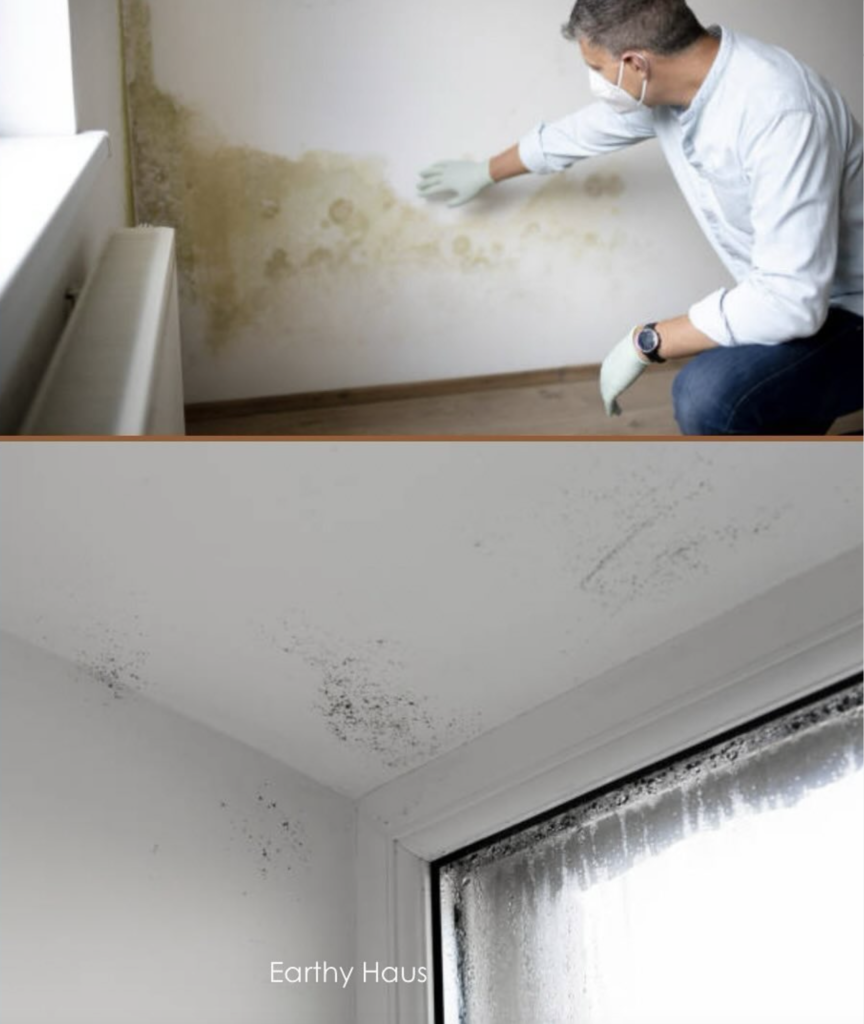
If thermal bridges aren’t properly managed with efficient detailing, they create cold surfaces inside the building. Remember my previous post about insulation and moisture levels in well-insulated, airtight homes? When high moisture air hits a cold surface, condensation happens, which leads to mould growth and poor indoor air quality. That’s why eliminating thermal bridges is crucial in our designs!
But is a Passive House 100% thermal bridge-free?
Not entirely! The Passive House standard allows for a psi-value of 0.01 W/(mK) or less, which is considered “thermal bridge-free design” in the Passive House world.
Remember, Passive House standards are all about creating extremely energy-efficient and healthy homes. So, this value is kept as low as possible to avoid the risks mentioned above.
When a thermal bridge is identified, our first option is to eliminate it in the design. If that’s not possible, we focus on optimising and minimising its impact. We use specialised software for thermal bridge calculations, giving us the data needed to determine if the detail needs improvement and how it will affect our goal of meeting Passive House standards.